

Flying with your bike can seem daunting at first. Airline rules differ, bike handling is unpredictable, and mistakes are expensive. With proper preparation, you can turn this into a straightforward process.
This guide explains what airlines look for, how to prep your bike, and what to check before and after your flight. Detailed airline rules are covered in the linked guides below.
Before You Book: What Airlines Actually Care About
Airlines don’t assess bikes based on brand, value, or emotional attachment. They care about three things only:
- Size – whether your bike case falls within oversize limits
- Weight – total weight of bike + case
- Packaging – whether the bike is protected and contained safely
Most problems at the airport come from assumptions rather than rules, so always confirm:
- Maximum weight allowance
- Oversized baggage fees
- Whether bikes need to be pre-registered
Weight & Size: Know Your Numbers
Before travelling, weigh your bike inside the bike box, not separately. Excess baggage fees are far more expensive at the airport than online.
- Average weight of a Mountain Bike = 13.6 kg
- Average weight of a Road Bike = 10kg
- Average weight of a Touring Bike = 13.5 kg
- Average weight of a Cruiser Bike = 16.5 kg
- Average weight of a Utility Bike = 17.4 kg
This leaves little margin, so packing efficiently matters.
Packing Your Bike for Air Travel
Good packing isn’t about overdoing it — it’s about preventing movement and stress.
Core packing steps
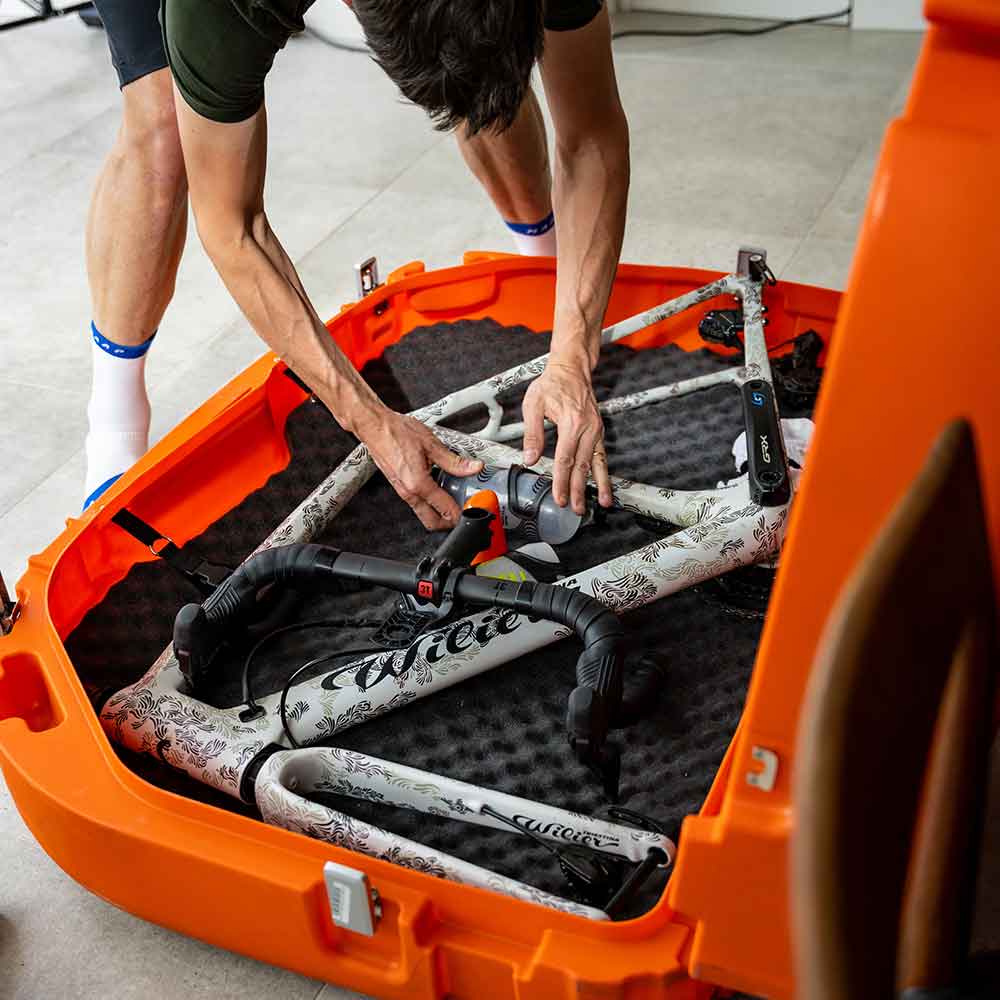
- Remove wheels and pedals
- Align or remove handlebars if required
- Protect frame contact points
- Secure components so nothing can move independently
Small details that matter
- Dropout spacers help prevent frame and fork compression
- Disc brake pad spacers prevent accidental lever pulls
- Avoid loose items inside the case
A well-packed bike should feel stable when the case is gently rocked — not rigidly clamped, but not free to shift.
Tools, CO₂ Cartridges & Airport Security
Tools
Do not pack tools in hand luggage. Even small multi-tools are often confiscated. Place all tools in checked baggage.
CO₂ cartridges
Regulations vary by airline and airport authority. While some guidelines allow limited quantities, enforcement is inconsistent. Many cyclists choose a mini pump to avoid issues altogether.
Getting Around at Your Destination
A common oversight is ground transport.
Before travelling, check:
- Hire car dimensions
- Taxi or shuttle capacity
- Hotel storage options
Upgrading vehicles abroad is often expensive or unavailable. Plan this in advance, especially for longer cases.
Insurance: Don’t Skip This Step
Even with careful packing, things can go wrong.
When choosing bike insurance for travel, confirm it covers:
- Damage in transit
- Loss or delay
- Replacement bike hire
- Accessories and components
- Return shipping if you’re injured
Read the small print carefully, especially exclusions around locks, off-road riding, or racing.
After You Land: What to Check
Before leaving the airport:
- Inspect the outside of the bike box
- Photograph any visible damage
- Report issues immediately to the airline
Once unpacked:
- Inspect frame, wheels, and drivetrain
- Compare with pre-flight photos if possible
Early documentation makes insurance claims far easier.

Airline-Specific Bike Policies
Every airline handles bikes differently. Some include them in standard baggage allowances, others charge fixed fees, and some require advance approval.
View our airline-specific guides for detailed policies, fees, and booking rules.
(Each guide covers one airline, so you know exactly what to expect before you fly.)
The Bottom Line
Flying with your bike doesn’t need to be stressful, but it does need planning. Understanding airline rules, packing properly, and thinking beyond the flight itself will remove most of the uncertainty.
Once you’ve flown with your bike a few times, the process becomes familiar and predictable, leaving you free to focus on the ride, not the logistics. Finally what to do if your bike box goes missing.