
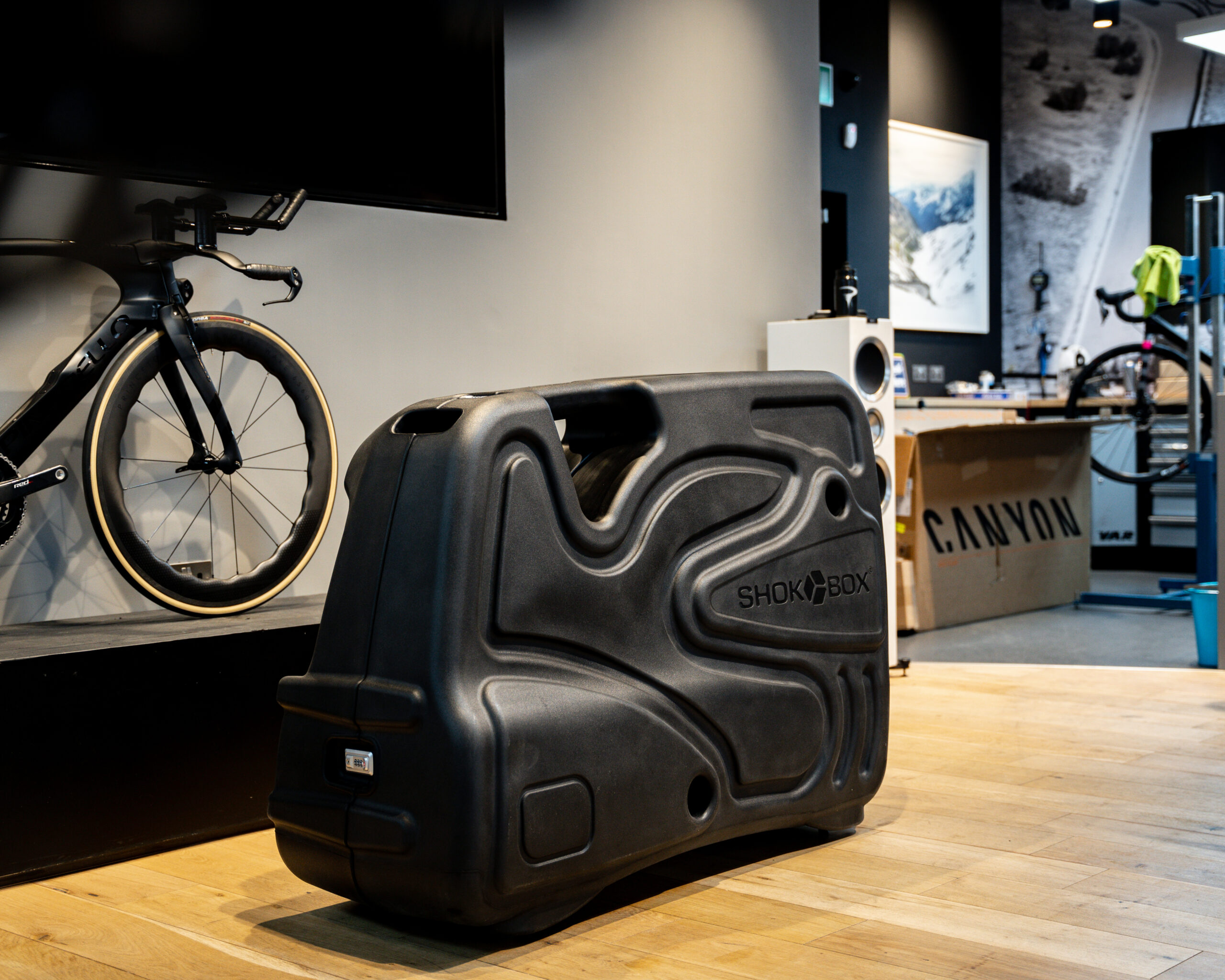
Whether you’re a competitive cyclist, a weekend rider heading abroad, or a cycle tourist planning your dream trip, a bike box is the safest and most convenient way to transport your bike.Whether you’re flying to a cycling event, heading abroad for a riding holiday, or transporting your bike long-distance, choosing the right bike box can make the difference between a smooth journey and a stressful one.
This guide explains what bike boxes are, how different designs protect your bike, and what actually matters when choosing one, especially for modern carbon bikes with integrated cockpits and hydraulic systems.
What Is a Bike Box?
A bike box is a purpose-built case designed to transport bicycles safely. Unlike cardboard boxes or improvised solutions, bike boxes are engineered to protect bikes from:
- Impact during baggage handling
- Crushing forces from stacking
- Abrasion from surrounding luggage
- Weather exposure and tampering
Bike boxes are used by individual cyclists, professional teams, rental companies, and event organisers — particularly when flying.

Hard Bike Box vs Soft Bike Bag: What’s the Difference?
Bike transport cases broadly fall into two categories: hard shell cases and soft bags.
Soft bike bags
Soft cases are typically lighter and easier to store. However, protection relies heavily on how the bike is packed and how carefully it is handled.
They may suit:
- Short car journeys
- Riders hire bikes at their destination.
- Situations where weight is the primary concern
Hard shell bike boxes
Hard cases provide a rigid outer structure that protects against crushing and direct impacts. They are generally heavier, but far more consistent in how they protect bikes during flights.
They are typically preferred for:
- Air travel
- High-value carbon bikes
- Integrated cockpits and deep-section wheels
- Repeat or long-haul travel.
Why Modern Bikes Need Better Protection
Modern bikes are not fragile, but they behave very differently under load.
Carbon frames distribute forces differently from aluminium, and integrated cockpits, internal routing, disc brakes, and rear derailleurs introduce new stress points. Traditional cases that rely on rigid clamping or compression can unintentionally transfer forces into sensitive areas.
Effective bike boxes don’t just stop movement; they manage impact energy and reduce stress throughout the entire system.
Why Specs Alone Don’t Tell the Whole Story
It’s tempting to choose a bike box based on a single number: weight, dimensions, or price. In reality, bike travel is a system, and every element interacts.
A lighter case may:
- It will be harder to manoeuvre.
- Require more dismantling
- Offer less protection
A slightly heavier case may:
- Pack faster
- Protect more consistently
- Reduce stress throughout the journey.
The goal isn’t to optimise one metric — it’s to make the entire travel experience easier and safer.

Key Factors to Consider When Choosing a Bike Box
1. Compatibility
Ensure the case fits your bike type:
- Road, gravel, or MTB
- Integrated cockpits
- Long rear derailleurs
- Deep-section wheels
Not all cases accommodate modern geometries equally well.
2. Protection Method
Look beyond the outer shell:
- Internal padding or foam
- Wheel separation
- Frame support zones
- Controlled movement rather than rigid clamping
Protection should absorb impact, not transfer it.
3. Ease of Packing
Packing shouldn’t require excessive dismantling or specialist tools. The best cases are intuitive and reduce the time spent rebuilding bikes at your destination.
4. Mobility
You’ll handle the case far more than baggage handlers will.
Consider:
- Number and quality of castor wheels
- Balance when upright
- Handle placement for lifting and stairs.
Poor mobility increases stress — for you and for anyone handling the case.
5. Security & Travel Readiness
A travel-ready bike box should include:
- Lockable closures
- TSA-approved locks
- Durable latches and hinges
If security features are sold separately, factor that into the real cost.
6. Weight & Airline Limits
Bike boxes typically weigh 12–13kg empty. Combined with the bike, this leaves a limited margin under common airline allowances.
Always weigh the packed case, not just the bike.
Are All Bike Boxes Equal?
No, and the differences become apparent over time.
Some cases are designed around:
- Frequent travel
- Minimal dismantling
- Long-term durability
Others prioritise:
- Low purchase price
- Lightweight construction
- Occasional use
Understanding how often you travel and how valuable your bike is will guide the right choice.
Who Should Invest in a Hard Bike Box?
A hard case is particularly well suited to:
- Cyclists flying multiple times per year.
- Riders travelling with carbon bikes
- Event-based travel (Granfondos, races, festivals)
- Anyone who values predictability and protection
For infrequent trips, hiring or renting may also be worth considering.
Our Final Thoughts
Choosing a bike box isn’t just about whether your bike fits; most cases will accommodate most bikes. What matters is how the case behaves throughout the journey.
A good bike box reduces dismantling, protects consistently, moves easily through airports, and removes uncertainty from bike travel. When chosen correctly, it becomes a long-term travel companion rather than a source of stress.